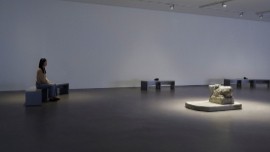
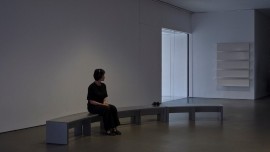
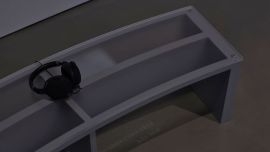
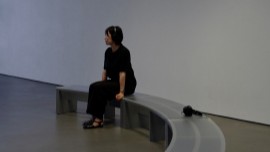
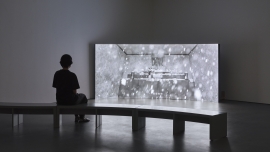
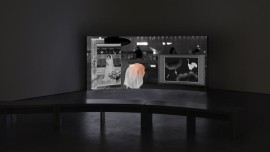
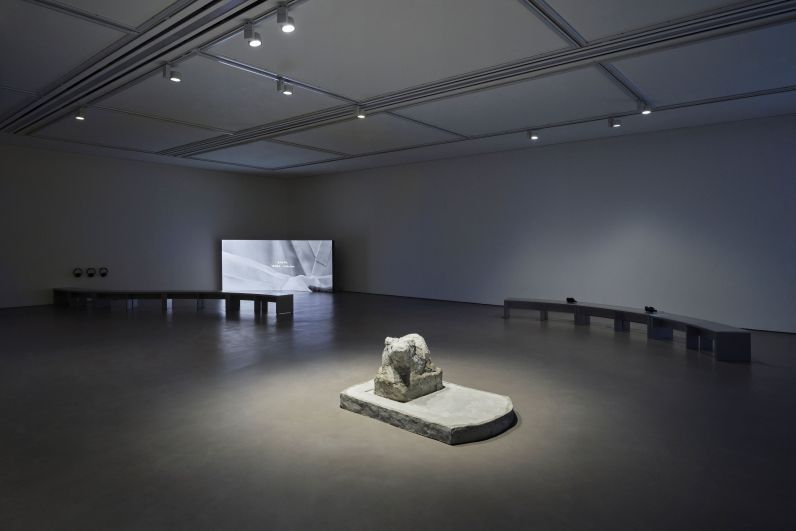
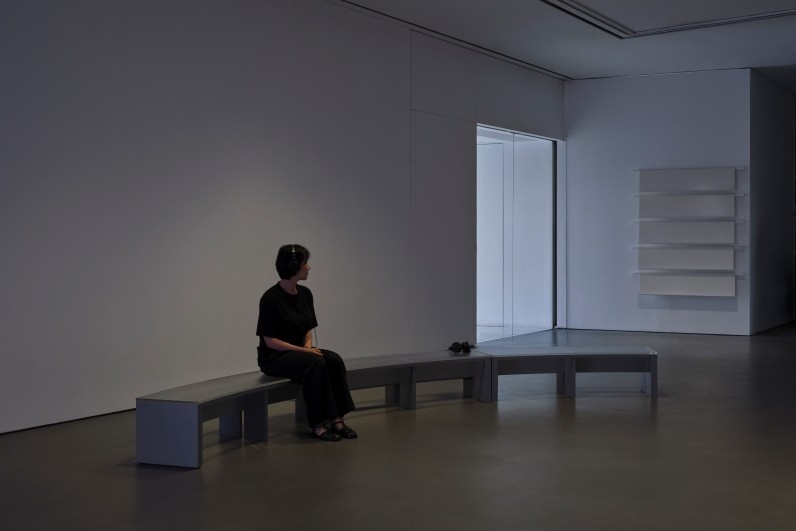
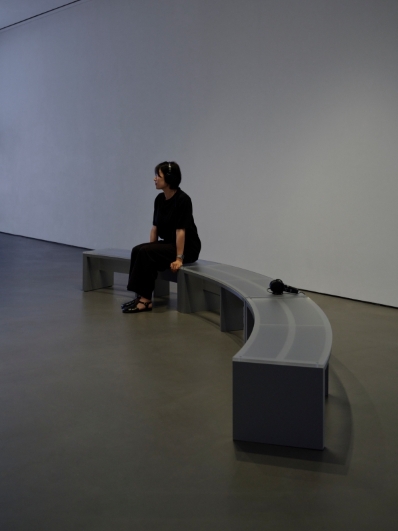
Installation view
2026
Photo by Euirock Lee
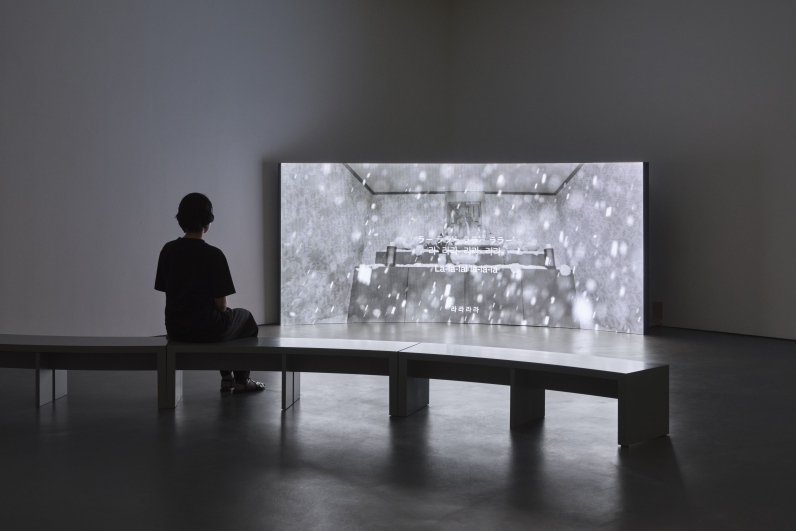
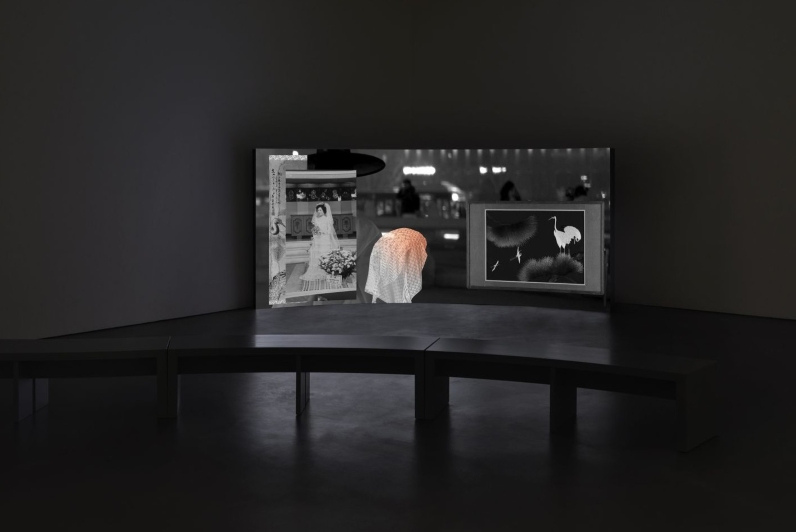
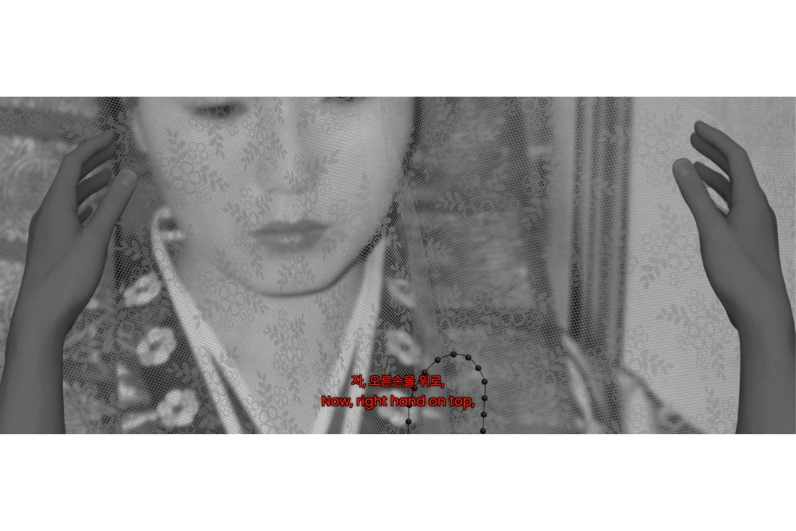
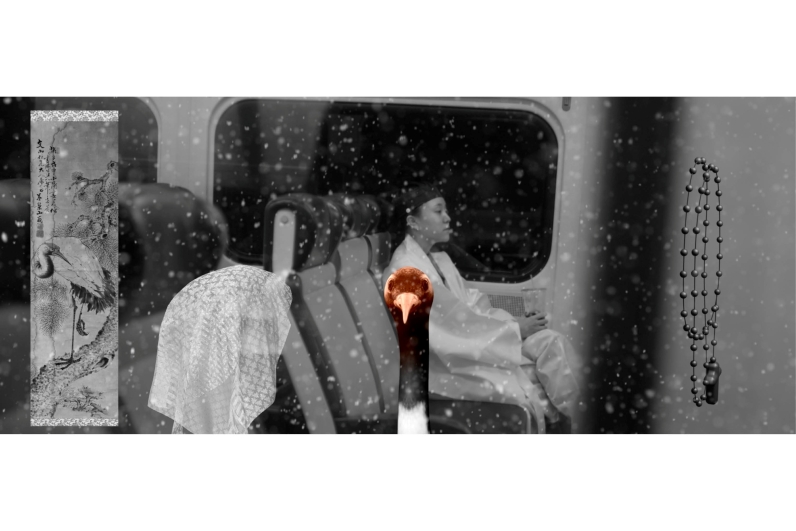
Tuesday-Saturday 11:00~19:00 / Closed on Sunday, Monday
DOOSAN Gallery: 15, Jongno 33-gil, Jongno-gu, Seoul, Korea
Tel. 02-708-5050
My grandmother, who passed away last year, had been nicknamed “the multilingual grandma” at the nursing home where she had spent the final years of her life. Born in 1930, she gradually erased her present and drifted closer to her past, and as her language and cognition regressed to those of a child, she suddenly began speaking in a mixture of Japanese, English, and Korean. Hearing my mother tell me about grandma’s new nickname, I let out a brief sigh—perhaps of amazement, perhaps of grief—and in that moment, the grandmother I knew shattered into pieces and dispersed into the air.
Will I be able to retrieve these fragments? My understanding of my grandmother cannot escape a series of refractions and distortions. Therefore, regardless of the amount of effort, the grandmother I remember will move toward a new figure. This exhibition holds a thought for all individuals who are like my grandmother, who continued to shape her identity until the last moment of her life, and everyone around them entrusted with the role of remembering them. It is up to you to choose whom or what to recall and how to hold them in your heart.
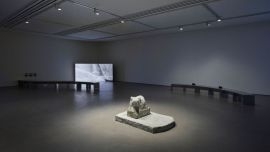
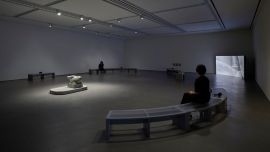
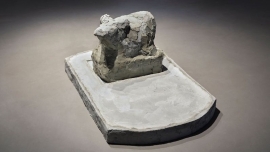
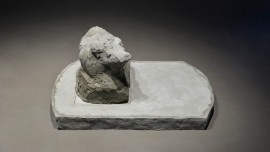
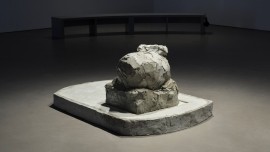
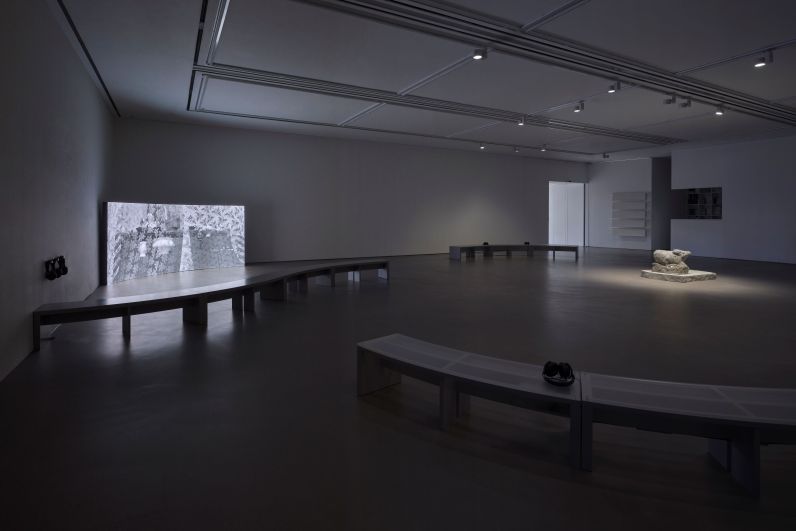
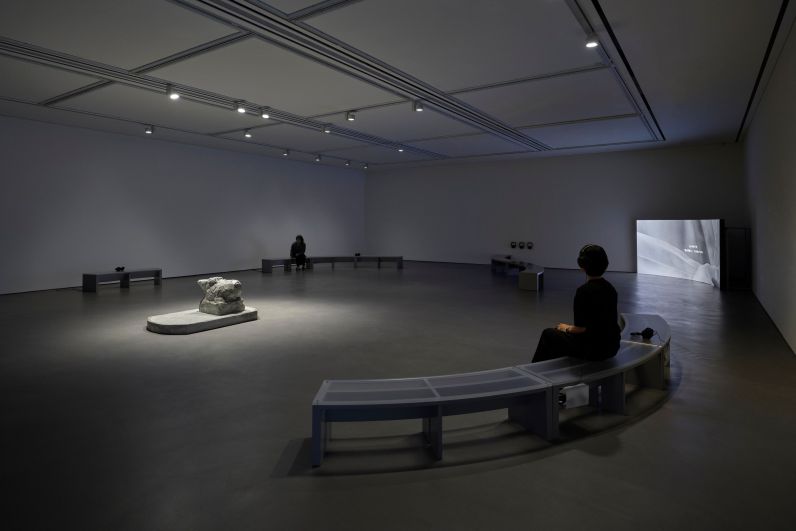
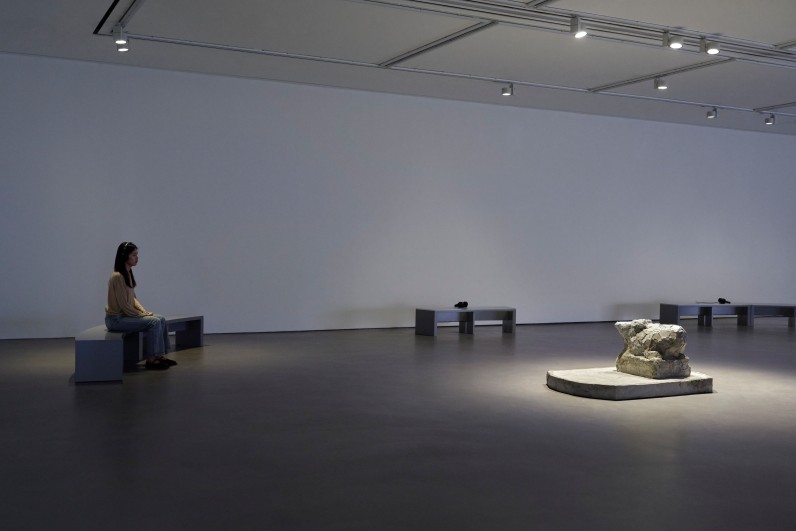
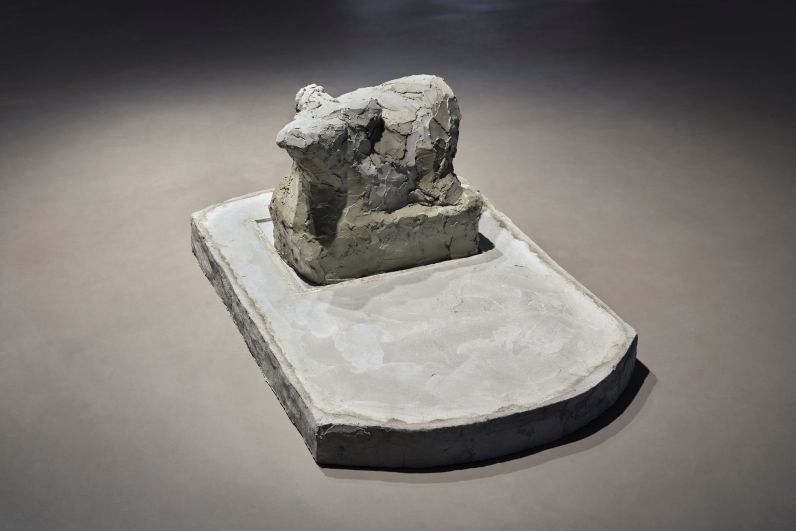
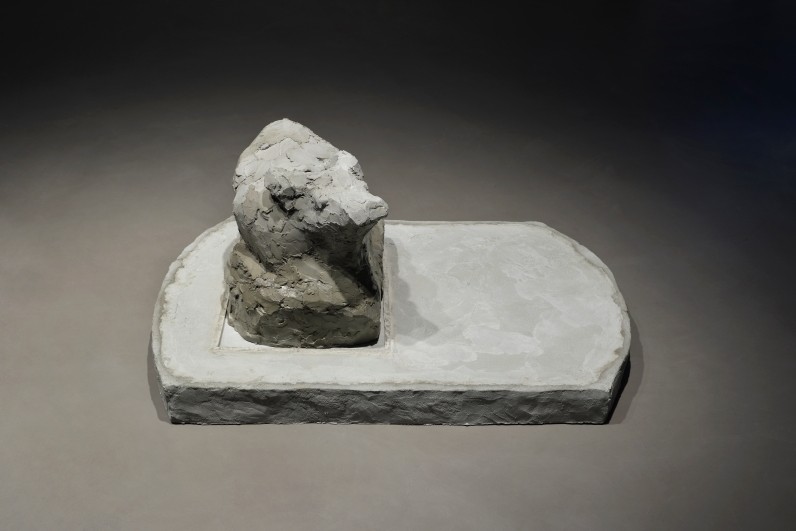
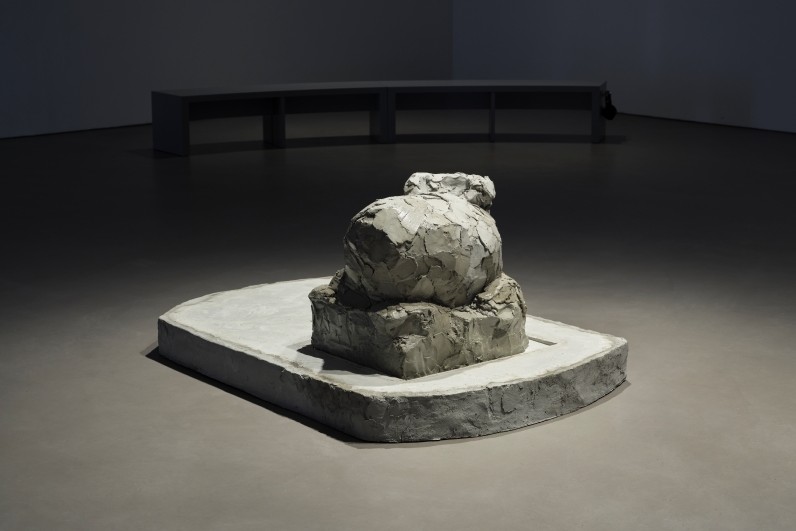
A sculpture without an author or a subject. A Wanderer (2022) by Chung Seoyoung lies idle in the middle of the exhibition space, like a nameless cornerstone one often comes across on the street. Plastered with layers of cement as if being patched up, the mass is in a tentative state of congealment, potentially being everything and nothing at once. A Wanderer, which you are forced to encounter repeatedly here, will likely appear different each time. In the numerous movements and encounters that occur in a person’s lifetime, one’s own will inevitably becomes intertwined with those of others. The individual, as the sum of all events and experiences encountered as well as affects held, can only remain a mystery. To approach this fluid portrait, I suggest that we veer off course from the usual methods of “understanding” we’ve been accustomed to, willingly embrace misunderstanding, and remain present while holding onto a vague faith toward the essence that will never be compromised.
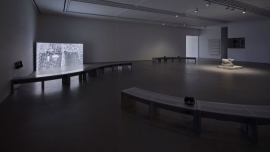
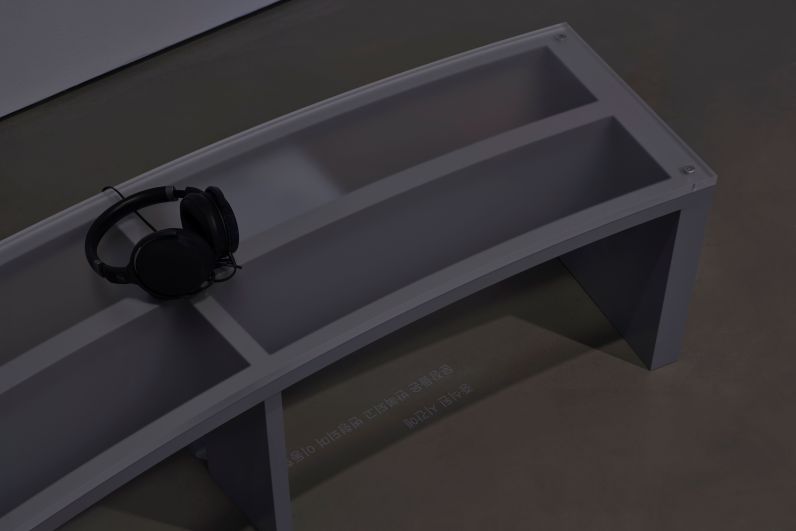
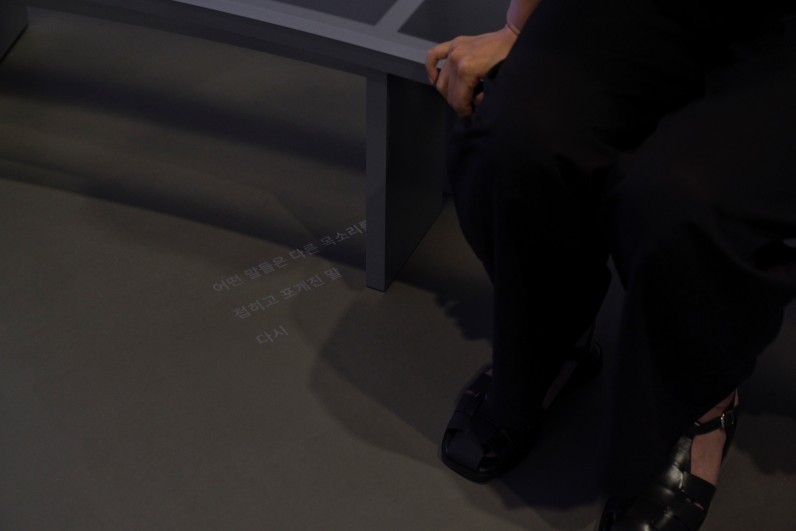
A sentence unowned. I Ordered a New Body and It Never Came (2026) by Choey Eun Young Cho is a transformed utterance that has passed through the bodies of others while being translated and revised several times. The original conversations with the artist’s own Korean grandmother and an American elderly woman with whom she shared an equally familial bond become lost in the process of being translated from Korean to English and back to Korean and being read aloud by the artist. The memories of the two women, who possessed different generations, languages, ethnic backgrounds, and historical circumstances that could not be unified into one narrative, move from one language to another and from one’s mouth to another’s ears, during which time the sentences gradually faded, digress, and gain an unexpected rhythm. At a point where it becomes indistinguishable whose memory arrived through whose sentence, multiple eras and narrators come alive simultaneously and proceed toward the future. In I Ordered a New Body and It Never Came, the past is not time that has passed but time that continues arriving through other mouths. Events told in the future tense sound more like anticipations than retrospections, and memory becomes something to be passed through, rather than possessed. As the time imprinted on one’s body gets transferred to another body, language connects the two as an incomplete medium.
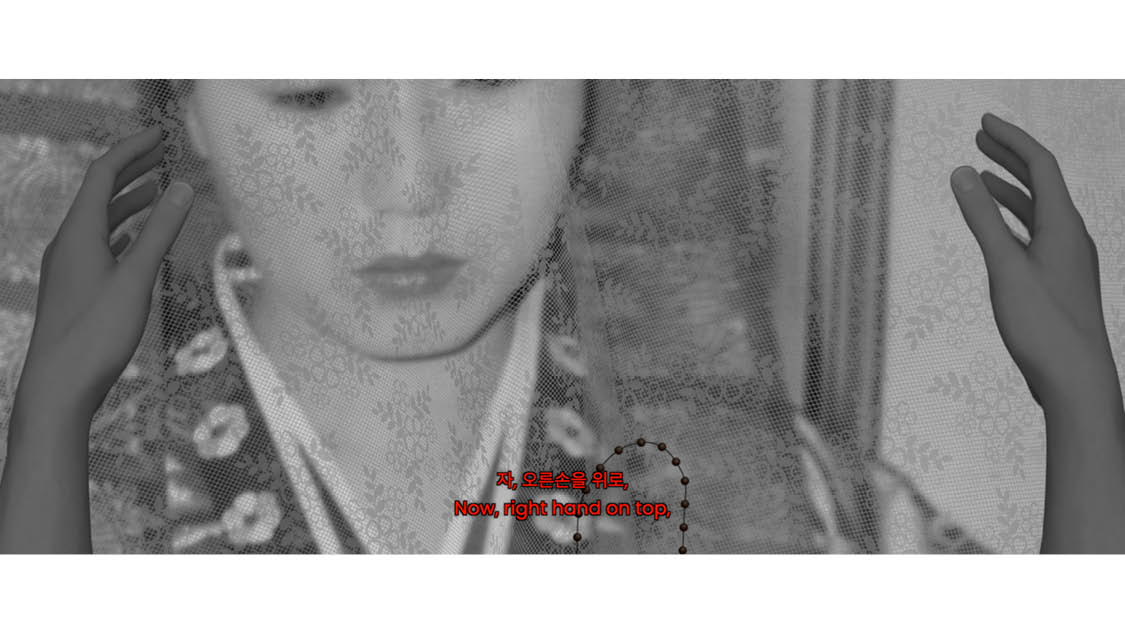
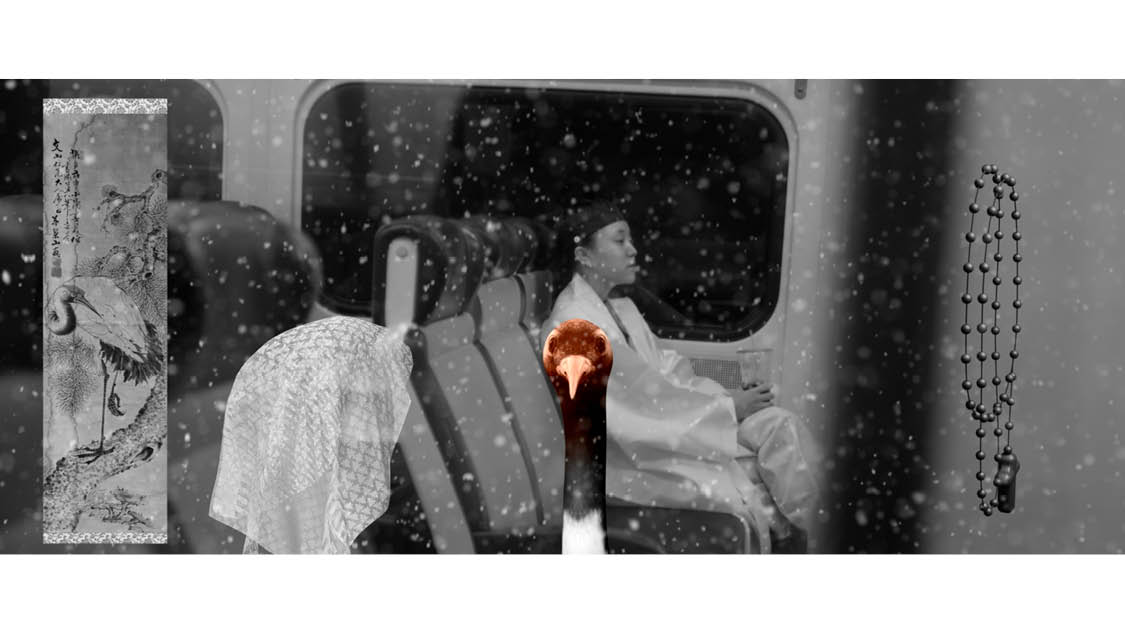
A story overheard. Like the melody of a popular song that lingers on the tip of your tongue despite not knowing when and where it started, some memories with unknown origins outlive a generation. Through the artist’s confessional narrative, Kakumei 鶴鳴 (2026) by IM Youngzoo explores how a heritage that cannot be explained in any words manages to continue and transform through the following generation. From faint memories of her grandmother, the artist overlaps her grandmother’s impression of a crane’s call and her code-like Japanese with her mother’s crane dance and intimate confession, evoking senses where the remnants, mimicry, transmission, rejection, and admiration of shamanism that remain in a family are entwined. The young twenty-four-year-old bride who used to be so afraid of shamanism that she couldn’t eat for a month after seeing the shrine hidden behind curtains on the first day of her marriage now moves her body in front of her daughter’s camera after a lifetime has passed. The ambivalence of the artist’s mother, who mutters, “I could do that too,” while watching a shaman dance even though she hates shamans, shows that something she believed erased still exists within her in a different form. The boundaries between ation and mimicry, tradition and remainder, and fear and affinity become loosely distant and are still close together. We live with things that are indecipherable, like gestures that persist despite having lost all meanings.
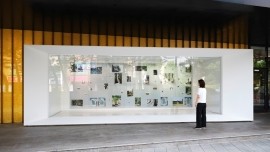
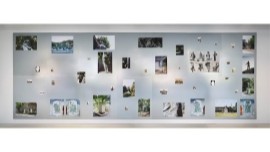
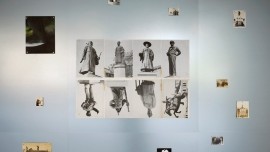
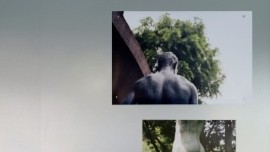
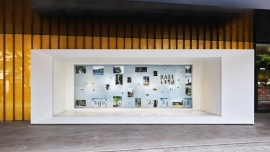
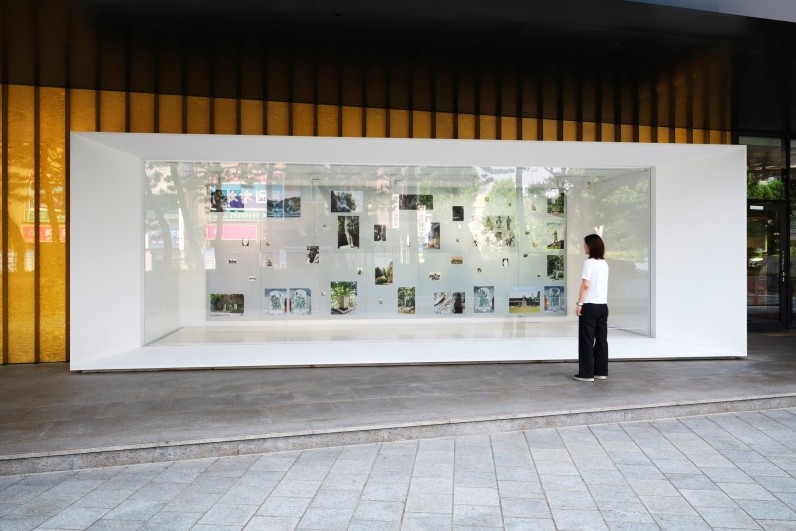
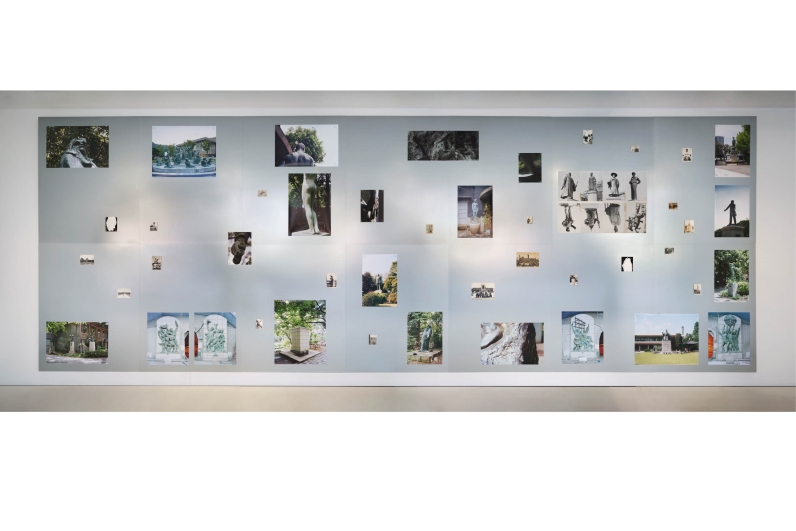
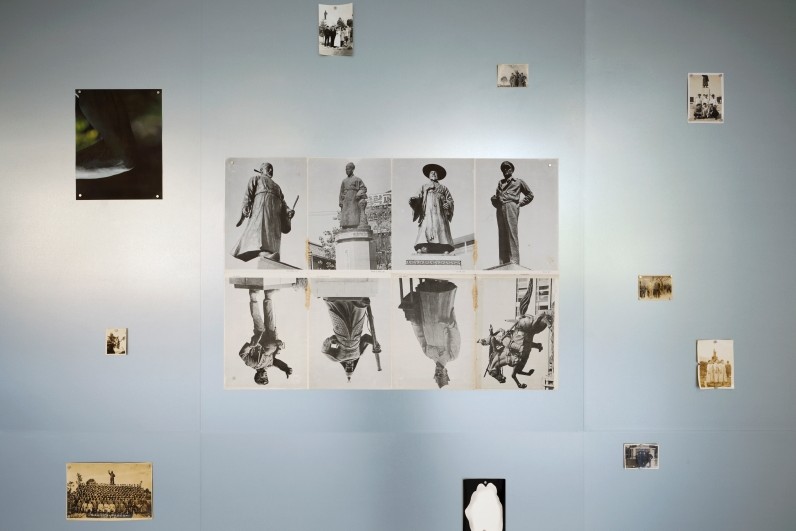
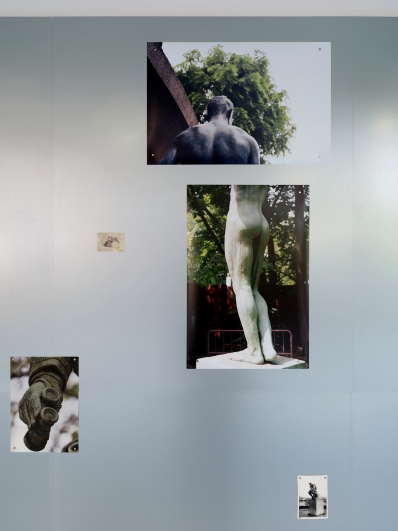
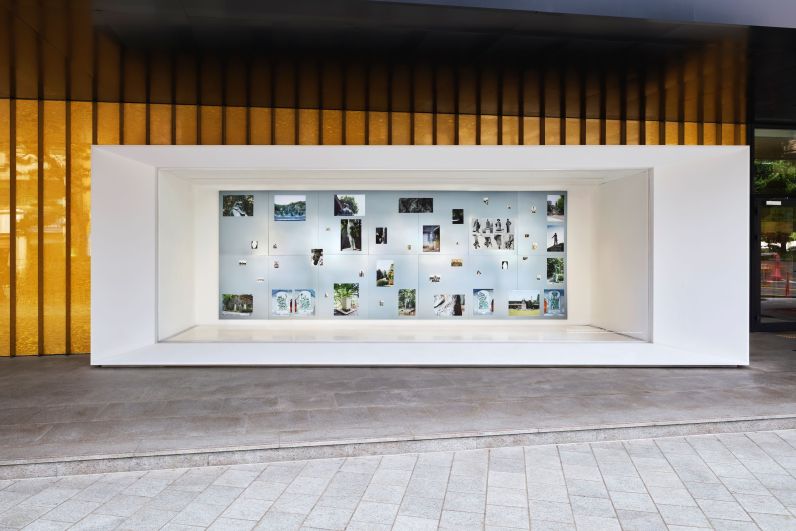
A belief transferred. The classification of the “Bronze Age” widely accepted since 1836 identifies the trends of a particular period by deducing patterns of connections among artifacts discovered in a mixed state. This recognizes that the past moves toward the future, intertwined in multiple layers. On the other hand, during the time when photography was trusted as an apparatus for objective ation, that very belief saved Auguste Rodin from the suspicion of lifecasting—The Age of Bronze (1877). However, a photograph is always only a part of a thing and time. The thousands of sculpted body fragments—abattis—and numerous archival photographs left by Rodin allow us to imagine new relationships among parts that can never truly become a whole. A Bronze Age (2026) by Gim Ikhyun, which traverses all these facts and beliefs, goes beyond an art historical rearrangement to highlight the vulnerability in the way we remember history and people amid countless omissions and ideologies. This perspective expands to the statue-building culture of and around the Colonial Joseon period to trace modern and contemporary statues in Korea and Japan and calls attention to the fact that statues functioned as ideological tools of modernity. Whenever politics and social beliefs shifted, the sculptures of an era were demolished or relocated and re-erected. Some were melted down to become different statues, while the author of one monument became the subject of another by a subsequent generation. Ultimately, the present that has reached us now after passing through a period is a vestige of the truth or belief that has repeatedly been deconstructed, confused, and retransferred.
A single person, event, or period endures through others who remember. Thus, the moment that we perceive as the present is really a mixture of the past and the future, and being the past, it creates a new delay, like a voice that disappears the moment it is uttered. Will it be possible to imagine a route that deviates from the direction mistaken to be the right answer by accepting such distortions and awakening more diverse senses? Untitled–Track 2 (2012/2026) by Chung Seoyoung replaces the perceptual experience on the street with language and sound and stimulates visual imagination through the sense of hearing without seeing within an auditory layer intermingled with noises and footsteps. As a person walks along houses and roads and spontaneously describing the things they see, the silences, omissions, and interferences of memory that occur while verbalizing the observations render our familiar everyday scenes unfamiliar. Within the gap of dissonance that arises as vision gets translated into language, the dynamics between sound and language become a sculptural event. Dissonance becomes a gap that enables a different reading and a different connection, not a failure of definition. It is only obvious that an individual cannot be contained in a single, fixed sentence. And there lies something unchanging.
* My grandmother Kang Sungsook, who is my mother’s mother, was born in 1930 in Hamgyeong Province, North Korea. After experiencing the Japanese colonial period, she escaped the North and fled to the south with her siblings to start a family, leaving behind a sister who had already married in the north. When the children she raised by herself after being widowed relatively early became adults, she moved to the United States to her siblings, who had immigrated there for the American Dream in the 1970s, and spent a decade there. Later she moved back to Korea and spent the rest of her life taking care of her children and grandchildren. I cannot forget the taste of my grandmother’s pork belly sandwich.
Hyejung Jang (Curator)
Gim Ikhyun (b.1985) imagines and observes worlds shaped by the entanglement of past and present, and by relationships unfolding across different scales, through photography and video. His solo exhibitions include AVP lab (2025, Seoul, KR), Gyeonggi Museum of Art (2020, Ansan, KR), Sansumunhwa (2017, Seoul, KR), and Space nowhere(2016, Seoul, KR). His work has been presented in group exhibitions at National Museum of Modern and Contemporary Art (2024, Gwacheon, KR), Waley Art (2024, Taipei, TW), the 7th Changwon Sculpture Biennale (2024, Changwon, KR), Busan Biennale 2022 (2022, Busan, KR) and SeMA Biennale Mediacity Seoul 2016 (2016, Seoul, KR).
IM Youngzoo (b.1982) explores how superstition, belief, and religious faith are formed and operate in Korean society through video, installation, performance, and publications. Her solo exhibitions include Space ZeroOne (2026, New York, US), Perigee Gallery (2024, Seoul, KR), and Hall 1 (2021, Seoul, KR). She has been participated in group exhibitions at the National Museum of Modern and Contemporary Art (2025, Seoul, KR), Seoul Museum of Art (2025, Seoul, KR), Ludwig Museum (2023, Koblenz, DE), Art Sonje Center (2021, Seoul, KR), and Taipei Contemporary Art Center (2019, Taipei, TW). In 2025, she was selected as one of the four finalists for the Korea Artist Prize (National Museum of Modern and Contemporary Art, Seoul, KR).
Chung Seoyoung (b.1964) has explored the shifting status and relationships of “objects” over time, expanding the boundaries of sculpture and opening up new discourse on how objects connect with the world. Her recent solo exhibitions include Garage Gallery (2026, Doha, QA), Tina Kim Gallery (2024, New York, US) and Seoul Museum of Art (2022, Seoul, KR). Her work has been presented internationally at the 2026 Carnegie International (2026, Pittsburgh, US), the 7th Changwon Sculpture Biennale (2024, Changwon, KR), the 11th Asia Pacific Triennale of Contemporary Art (2024, Brisbane, AU) and Keelung Museum of Art (2024, Keelung City, TW).
Choey Eun Young Cho (b.1985) lives and works between South Korea and the United States. Her practice addresses how language, material, and memory exert pressure on one another. Her solo exhibitions include Project Space Sarubia (2024, Seoul, KR), Holman Arts & Media Center (2023, Incline Village, US) and Sunview Luncheonette (2022, Brooklyn, US). She has participated in group exhibitions at the Louise Hopkins Underwood Center for the Arts (2023, Lubbock, US), PAUSE OFF (2022, Milford, US), and Foxy Production (2022, New York, US).
Curated by Hyejung Jang│Assisted by Jinyoung You, Jungmin Lee, Bomi Jang, Jihee Jun, Seohui Hong
Related Contents